Same day dispatch on all stocked items.
Don't Sacrifice Usability
The flexibility afforded by modular remote I/O devices may come with hidden costs and additional effort if you don’t pay attention to how the device will be implemented and actually used in your field application. You definitely don’t want to sacrifice any usability for the sake of greater flexibility, or you’ll end up spending additional effort that cancels out the benefits of modularity in the first place. There are essentially two stages in which usability pitfalls may arise.
Initial Installation
Modular I/O solutions are ideal for IIoT applications that have a high volume of different data acquisition needs. So if your application calls for modular I/O devices, then you probably need a large number of I/O modules too. With so many moving parts to keep track of, you don’t want to waste time on getting things up and running. User-friendly installation features to look for include convenient and standardised mounting options, as well as an optimised wiring design.
Operation and Maintenance
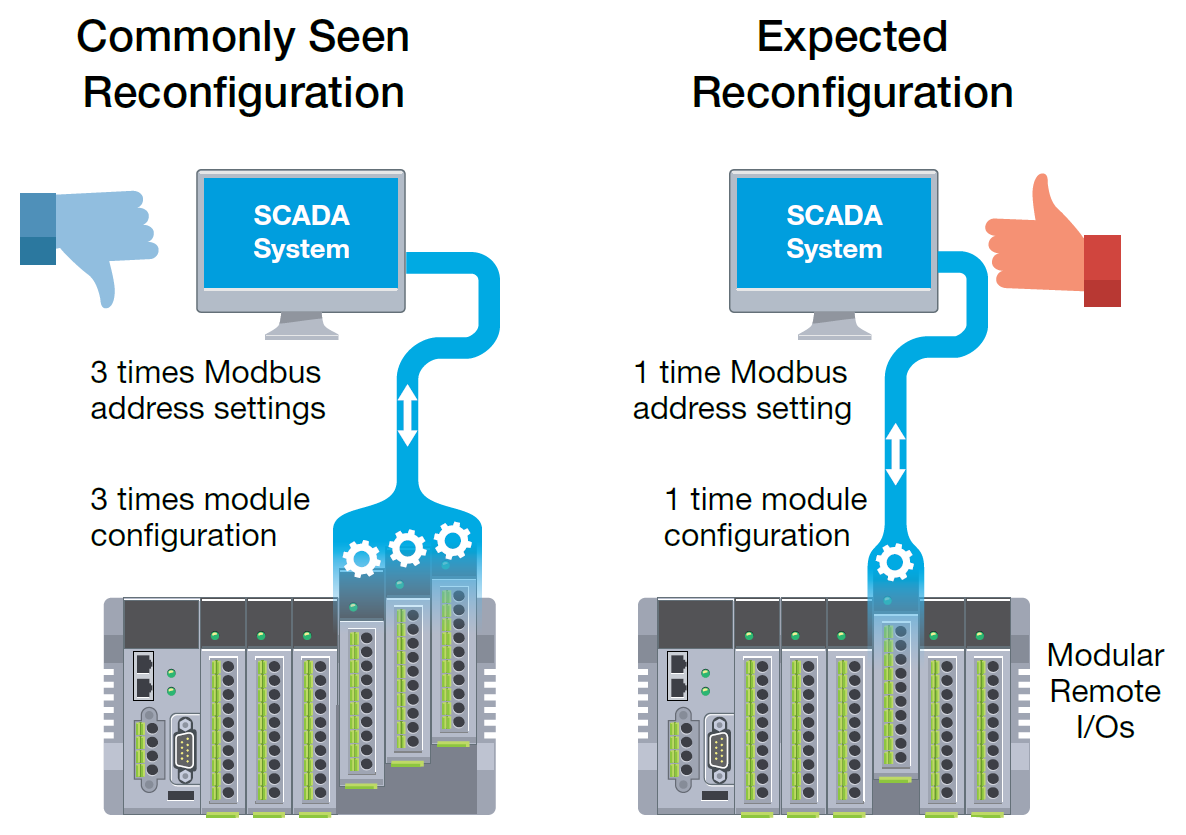
Modular I/O devices are also used to adjust and expand the scale of data acquisition applications. A larger system, however, also requires more time to configure all the additional I/O modules. If a single module is changed within the system, the unchanged module also needs to be reconfigured because of the sequence change. Besides the modules, you also need to ensure that the innumerable SCADA system settings are all up-to-date and comply with every module change. Indeed, a user-friendly modular I/O solution can reduce unnecessary effort and should not be overlooked.
See the “I/O” in the “I-Io-T”
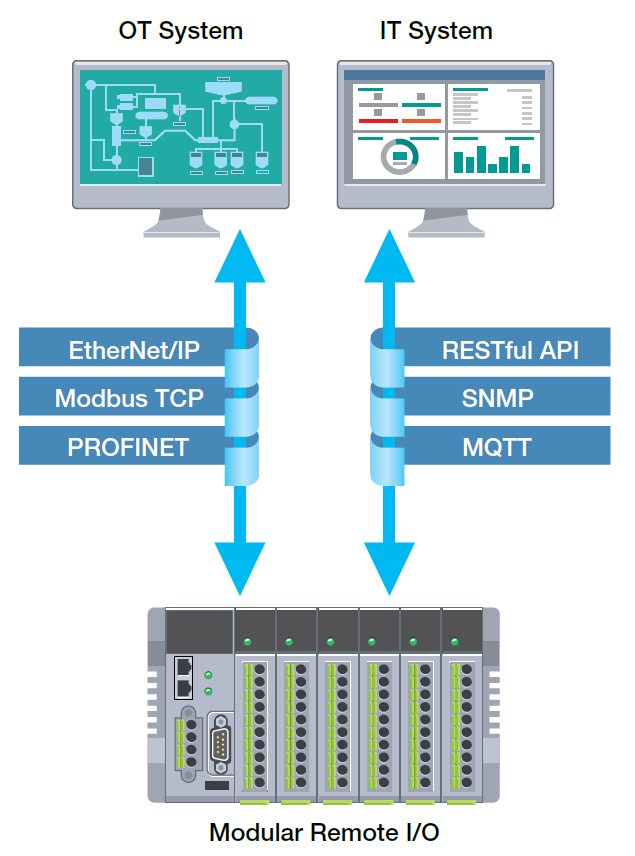
As mentioned earlier, the convergence of IT and OT systems in today’s IIoT applications has prompted the development of new and enhanced edge devices, including modular I/O solutions. Nonetheless, OT and IT systems still rely on inherently different communication protocols. We don’t need a one-size-fits-all remote I/O solution for both IT and OT, but ensuring all parts of your IIoT application fit and work together is critical. For instance, emerging IT protocols, such as MQTT, SNMPv3, and RESTful APIs can enable OT applications to leverage traditionally IT-based analysis tools or services. Choosing a modular remote I/O that is futureproof with IT/OT readiness is essential in the age of IIoT.
Don't Forget About Security
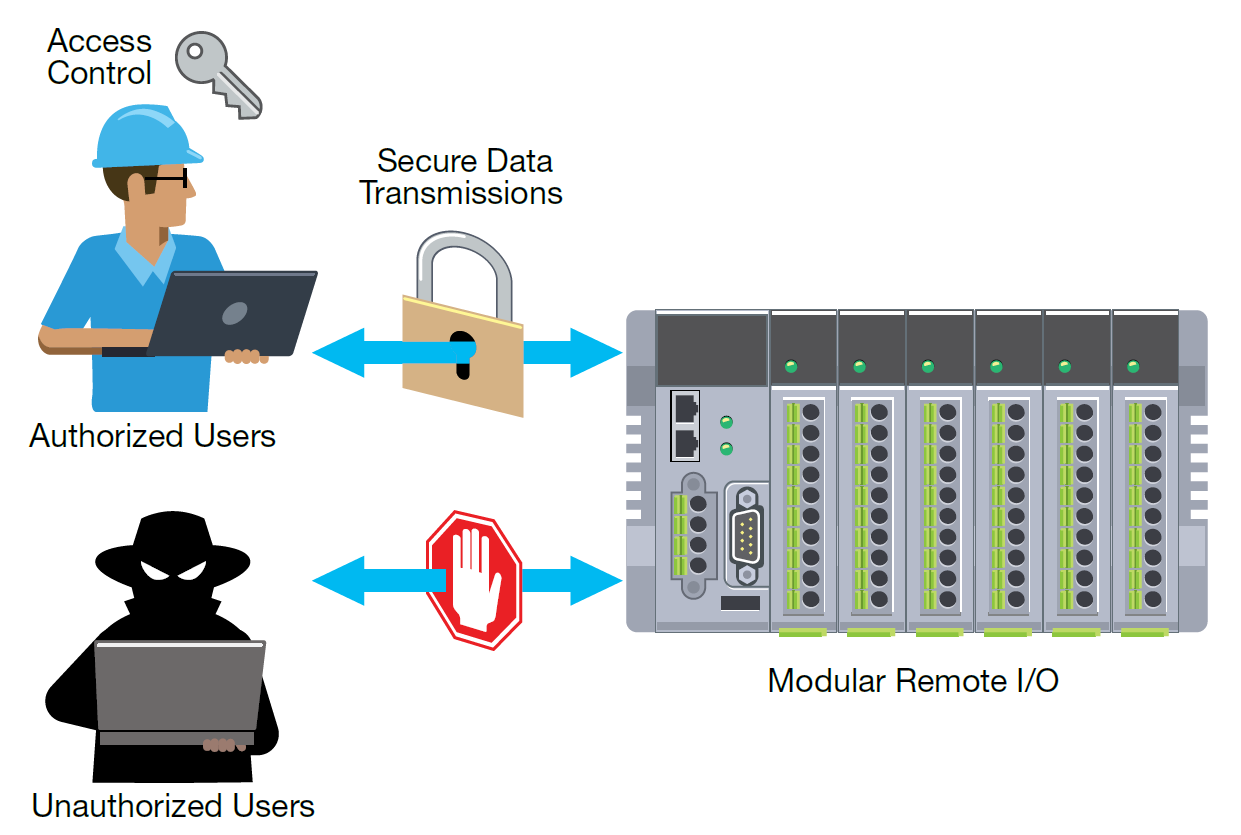
Cybersecurity concerns are inevitable whenever devices are connected over a network as in the case of any IIoT application. Remote I/O devices are no different. You’ll need to carefully manage the accessibility and data confidentiality of the devices on your network. Making sure the security policies enforced within your organisation is as important as making sure your devices are equipped with necessary security features. Ensure devices have the ability to block unauthorised access and control the traffic that is allowed. In addition, enabling secure data transmission for communicating sensitive data on the network protects your valuable information. When selecting modular I/O solutions, cybersecurity is definitely a consideration you want to take into account.
Applying the above considerations when choosing your remote I/O solutions can ultimately make data collection easier and ensure your daily operations stay smooth and secure. In anticipation of new demands on I/O connectivity, Moxa has developed a futureproof modular remote I/O device that delivers more value with less effort for IIoT data acquisition. If you are interested in learning more about industrial connectivity, download Moxa’s eBook: https://bit.ly/2ZAs0Po